Agentic project management: why the AI shift moves the bottleneck to senior judgment

Something shifts the moment you stop asking a project manager “where are we at” and start asking an agent instead, and getting an honest answer.
We’ve been watching this shift happen from the inside, running nearshore development teams that build software for Nordic clients. And the more we sit with it, the more we think the interesting part isn’t the AI itself. It’s what happens to an organization once information stops arriving late, softened, or filtered through three layers of “let’s circle back on that.”
The oldest problem in delivery was never really about skill
Every delayed project we’ve been part of had the same root cause, and it wasn’t a lack of talent. It was information arriving too late, or arriving pre-optimized for how it would land. Someone, somewhere, quietly decided the status update could wait a week, or that “on track” was close enough to true.
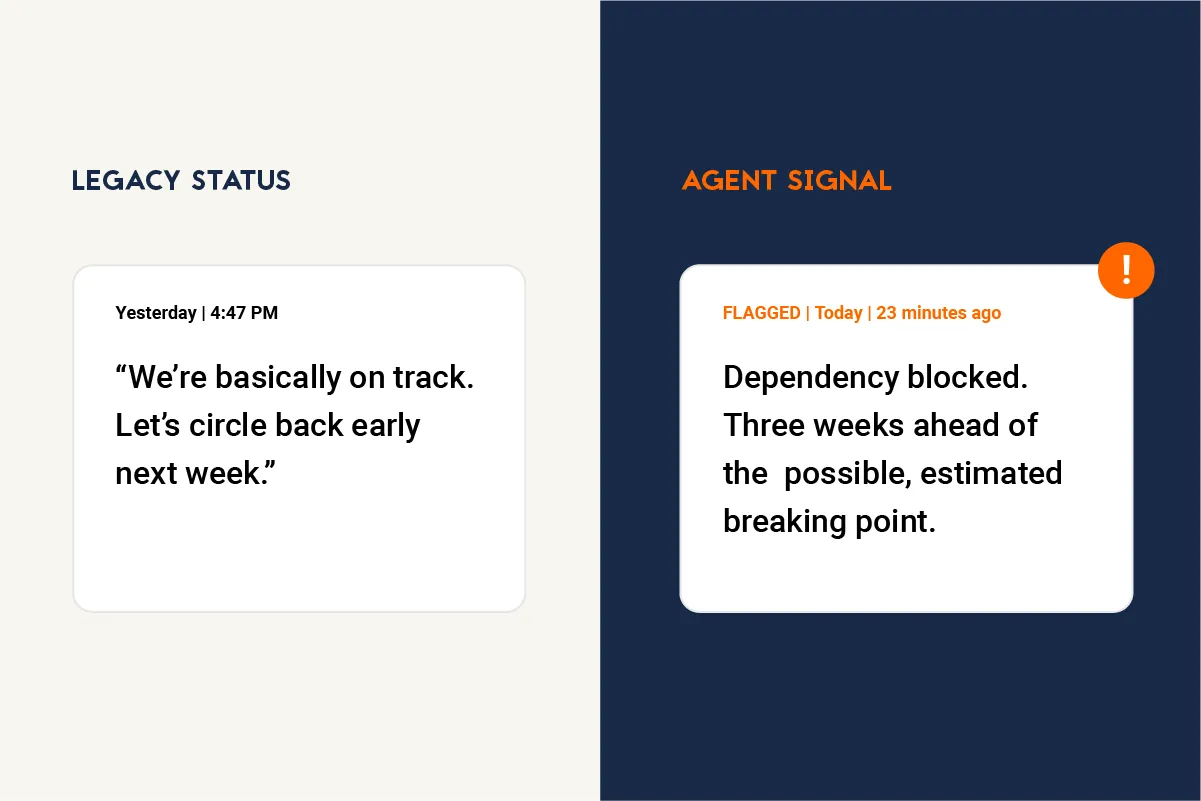
Agents don’t do that. They don’t have a boss to protect or a Friday deadline to look good for. They watch dependencies across a whole project portfolio continuously, flag the bottleneck before it becomes one, and don’t sugarcoat it on the way. Removing the delay and the diplomacy, on its own, changes how often projects land on time and on budget.
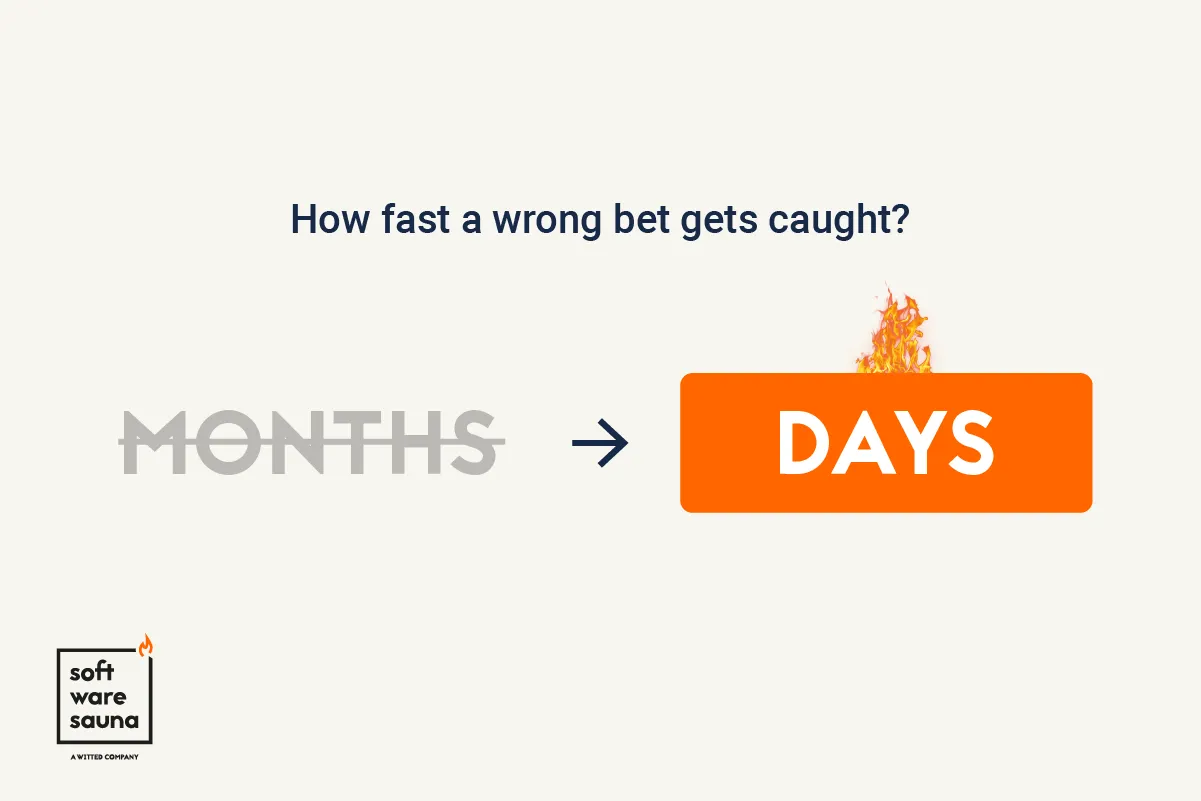
It also changes something sharper: how fast a company can tell whether a project is still worth doing. When an agent can show, in real time, that a project’s business case no longer matches where the market moved, that call gets made in days. Not found six months too late.
The cost of being wrong stops being measured in months and starts being measured in days.
The cost of being wrong stops being measured in quarters and starts being measured in days. That’s not a productivity gain so much as a different category of decision-making. And it only works if someone is actually empowered to act on what the agent surfaces the same week it surfaces it.
Flatter organizations, and why distributed teams already fit this shift
Once project status is visible and trustworthy to everyone at once, the middle layer whose job was translating and filtering information starts to matter less. Decisions move down. Project managers and specialists stop spending their time chasing status and start spending it on the judgment calls the agent surfaced but can’t make itself.
That flattening lines up closely with how distributed, nearshore teams already work best. When trust is built on shared, real-time data instead of who’s in the room or who caught the hallway conversation, geography stops being the constraint it used to be.
An agent doesn’t care whether the engineer catching an escalation is sitting in Helsinki or Zagreb.
The team best positioned to run this way isn’t necessarily the one sitting closest to headquarters. It’s the one that already had to build trust without proximity. That’s simply how cross-border teams have always had to work. An agent doesn’t care whether the engineer catching an escalation is sitting in Helsinki or Zagreb. What matters is whether that person is good enough to be handed the call.
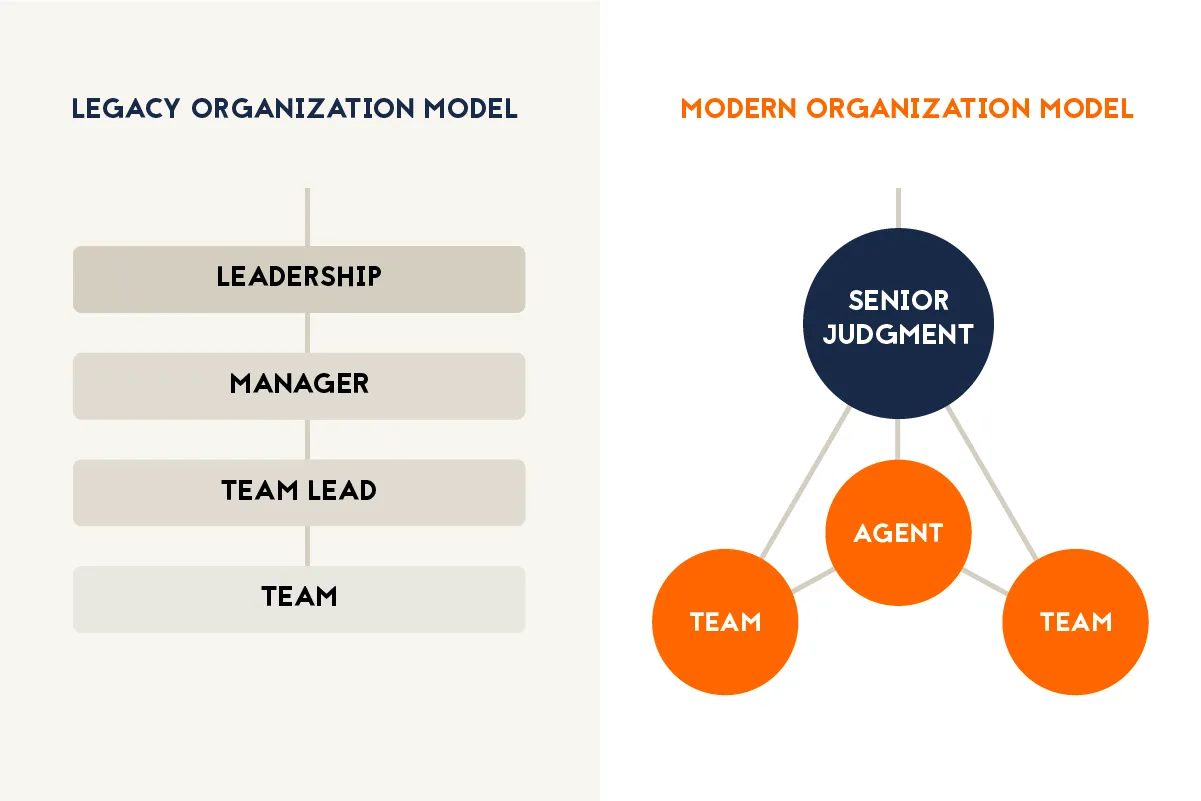
The secret underneath the AI hype deck: senior judgment is the bottleneck
An agent can flag a risk three weeks before it lands. But it can’t decide what to do about it. That still takes a senior person who’s seen enough projects go sideways to know which fire is real and which one burns itself out. And that’s exactly where most companies get stuck. Not because the AI tooling isn’t ready, but because the people who can work alongside it are almost impossible to find.
Every company, everywhere, is chasing that same thin layer of proven people, and it’s getting thinner every quarter.
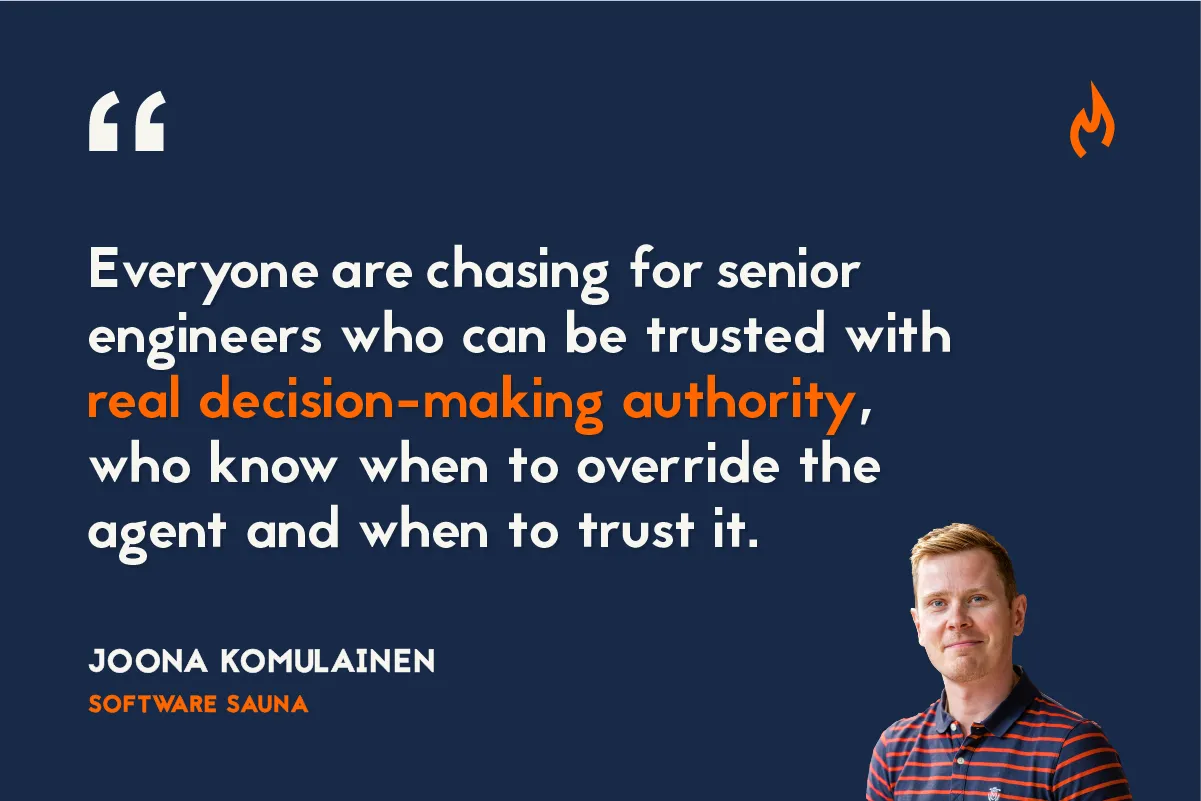
The market is flooded with developers. What’s genuinely scarce is the top slice: senior engineers and specialists who can be trusted with real decision-making authority, who know when to override the agent and when to trust it. Every company, everywhere, is chasing that same thin layer of proven people, and it’s getting thinner every quarter.
The limiting factor on how fast an organization can adopt agentic delivery isn’t tooling spend. It’s whether there’s enough senior judgment on hand to point the tooling at.
Why this makes nearshore an access conversation, not a cost one
This is exactly where nearshore stops being a cost conversation and becomes an access conversation. Working with experienced teams in the Balkans isn’t about finding “good enough, but cheaper.”
It’s about widening the pool of people who can actually run point on this AI-augmented way of working. People who’ve already built the habits of high-trust, output-driven, asynchronous collaboration, because that’s simply how cross-border teams have always had to operate.
The sourcing question stops being “who’s affordable” and becomes “where is the senior judgment we need actually available, and stable, right now.”
Agents remember, so the organization can stop forgetting
One more thing worth pointing out: agents remember. Every decision, every course correction, every outcome becomes part of the organization’s collective memory instead of quietly dying in a retro deck nobody reopens. New projects inherit what worked and skip mistakes that already got made once.
This changes predictability and success rate climb. Not because people got smarter overnight, but because the organization finally stopped forgetting.
Where to start
If you’re a CTO or business leader reading this, the place to begin isn’t a strategy document. It’s three concrete questions about your organization right now.
First: when a project falls behind, how many people see that before you do?
And how filtered is what actually reaches you by the time it does?
Second: who on your team is trusted to override a system, or a status report, and be right often enough that you’d back their call without a second opinion?
If you can’t name them, that’s worth knowing before you invest further in the tooling.
Third: if that person left tomorrow, would the next project inherit what they knew, or start from zero?
None of this is really about the tech. It’s about how fast an organization can turn what it learns into what it does next, and whether it can find, and keep, the people sharp enough to make that call. That last part is the real constraint. Everything else is just tooling.


